


Skillsoft
Skillsoft is a global leader in corporate learning, providing digital training and education solutions to help businesses improve workforce productivity, reduce risk, and increase innovation.



Getting the definition right is the whole game, because the wrong label leads straight to the wrong fix. Two terms get confused constantly, and the confusion is expensive.
The difference between the results you expect and the results you actually get — from a person, team, or process. It is a symptom, with many possible causes.
Shows up as: missed targets, slow output, quality issues, inconsistent results.
A specific missing ability — the person cannot do something because they have not learned it. It is one possible cause of a performance gap, not the same thing.
Shows up as: a task done wrong or not at all because the know-how isn't there.
Here is the trap: a skill gap always produces a performance gap, but a performance gap does not always come from a skill gap. Someone can have every skill the role needs and still miss targets because the brief was vague, the feedback never arrived, or the tools slowed them down. Treating the two as synonyms — reaching for a course whenever results dip — is the single most common L&D mistake. Understanding the difference is what lets you spot the causes training can't fix, which is the next five sections. For the skills side specifically, see our guide to skills and competencies.
Most performance gaps trace back to one of five causes — and the reason they persist is that none of them is the obvious "needs more training". Here is what is really going on beneath the surface.
People cannot hit a target they cannot see. When "good" is undefined — vague briefs, fuzzy goals, shifting priorities — effort scatters and results fall short, no matter how capable the person is.
A quiet missing skill often looks like poor attitude or motivation. The person is trying, but lacks a specific ability nobody has named — so they get coached on effort when they needed to be taught a skill.
Without regular, honest feedback, small problems compound silently. People do not know they are off track until a review, by which point the gap is entrenched and harder to close.
If there is no time, permission, or expectation to improve, capability stalls. People stay stuck at their current level because the organisation never made growing part of the job.
Poor tools, tangled processes, or metrics that reward the wrong things cap performance regardless of skill or effort. The person is capable; the system around them is the bottleneck.
Notice that only one of the five — hidden skill gaps — is something a course directly fixes. The other four need clarity, conversation, culture, or system change. That is exactly why "just train them" so often fails. Why these causes stay invisible is the next question.
If these causes are so common, why do they go unaddressed for so long? Because each one is easy to misread as something else — the symptom is loud, the cause is quiet.
| What you see | What it's misread as | What it often really is |
|---|---|---|
| Missed targets | "They're not trying hard enough" | Unclear expectations or a missing skill |
| Repeated small errors | "Careless" | No feedback loop to catch and correct early |
| Slow progress | "Low ability" | Tools or process getting in the way |
| Stalled growth | "Not ambitious" | No time or permission to learn |
| Inconsistent quality | "Unreliable" | The standard of 'good' was never defined |
The pattern is the same every time: the visible behaviour gets blamed on the individual, while the real cause sits in clarity, feedback, culture, or systems. Gaps also hide when performance is tracked by activity — hours logged, tasks ticked — rather than by capability and outcomes. Until someone deliberately looks past the symptom, the organisation keeps treating the wrong thing. That deliberate look is a diagnosis, and it is next.
Before prescribing anything, run a short diagnosis. The goal is to tell which of the five causes is at work — because the same symptom points to different fixes.
Write down what "good" looks like in concrete terms. If you cannot state the standard clearly, unclear expectations is likely part of the gap — and you have found the first fix already.
Ask: could the person do this well if their life depended on it? If yes, it is not a skill gap. If no, you have a genuine training need — not a motivation problem.
Is the person getting regular, specific feedback? If problems only surface at review time, broken feedback is letting gaps grow unseen.
Examine tools, process, workload, and metrics. If capable people consistently struggle in the same spot, the system — not the person — is the cause.
Run these four checks, and the true cause usually becomes obvious — and often it is more than one. Only now is it time to choose a fix, and matching the fix to each reason is the next section.
Once you know the cause, the fix follows. The point of diagnosing first is that each of the five reasons needs a different response — and only one of them is a course.
| Hidden reason | What L&D can do |
|---|---|
| Unclear expectations | Define and communicate what "good" looks like — clear goals, examples, and standards, agreed with managers |
| Hidden skill gaps | Run a real skill assessment, then deliver targeted training for the specific gap — not a generic course |
| Broken feedback | Equip managers to give regular, specific coaching; build check-ins into the rhythm of work |
| Weak learning culture | Create time, permission, and expectation to learn; make development part of the role, not an extra |
| Systemic barriers | Partner with the business to fix tools, process, and metrics; escalate what L&D cannot change alone |
Two things stand out. First, most of L&D's highest-impact moves here are not delivering content — they are clarifying, coaching, and shaping culture. Second, the culture fix underpins the rest: where learning is expected and supported, every other gap is easier to close. For that foundation, see our guide to building a learning culture. A checklist to put this into practice comes next.
Turn the diagnosis-first approach into a repeatable routine. Work through this whenever performance gaps appear, before reaching for any single solution.
The discipline that makes this work is resisting the reflex to jump straight to a course. Diagnose, then treat, then verify. Before that becomes second nature, it helps to know the mistakes that keep L&D stuck — next.
Even well-run L&D teams fall into a few traps that leave gaps unclosed. Each has a clear correction.
Defaulting to a course for every performance problem.
Diagnose first — four of the five causes aren't solved by training.
Blaming the individual instead of examining the system.
Ask whether capable people struggle in the same spot — that points to the system.
Measuring activity — hours, completions — instead of capability.
Track skills built and outcomes moved, so real gaps become visible.
Treating a one-off training event as "job done".
Close the loop — measure whether the gap narrowed and iterate.
Working around managers instead of with them.
Most causes live in the manager relationship — equip them to clarify and coach.
Avoid these and L&D shifts from a course-delivery function to a genuine performance partner. The tool that makes the skill side of this visible and measurable is the last section.
Of the five causes, the one L&D owns most directly is skill gaps — and the reason they hide is that most organisations can't see their skills clearly. Skills Caravan fixes that, so genuine performance gaps from missing skills are identified rather than guessed at.
Shows the skills people actually have against what their roles require — so a real skill gap is confirmed, not assumed.
Pinpoints exactly where capability falls short, separating a true training need from a clarity or feedback problem.
Delivers the specific learning that closes the identified gap, in the flow of work — not a generic course.
Measures capability built, not just courses completed, so you can confirm the gap actually narrowed.
Gives L&D evidence to rule the skill cause in or out, so effort goes to the reason that is really at work.
The result is that L&D stops treating every gap as a training gap and starts fixing the right cause with real data. To direct that learning well, see our guide to upskilling and reskilling.
Map skills against role requirements, target learning at the real gaps, and track the capability you build. See Skills Caravan on a live demo.
Book a demo
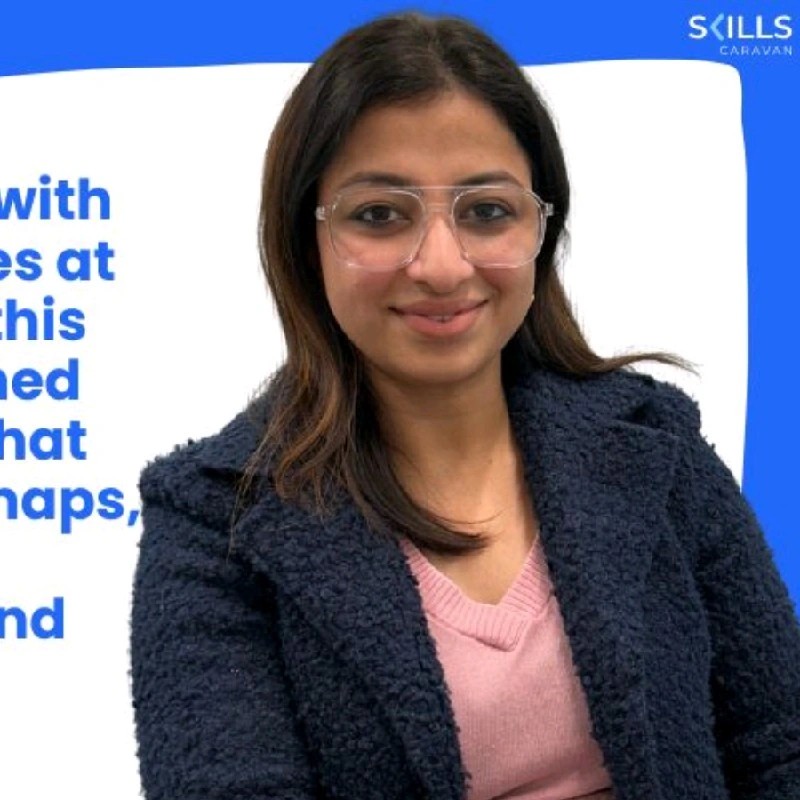

Shreya Verma is the VP of Product and Customer Success at Skills Caravan, where she leverages her decade-long expertise in learning & development (L&D) and human resources to shape an impactful, learner-centric platform. Her deep understanding of user needs, honed through hands-on L&D roles in leading companies, empowers her to translate insights into high-engagement interventions. At Skills Caravan, she bridges the gap between technology and people, ensuring learning experiences are not only effective but genuinely meaningful.











Skillsoft is a global leader in corporate learning, providing digital training and education solutions to help businesses improve workforce productivity, reduce risk, and increase innovation.

FinShiksha provides a practical and industry-relevant approach to finance education, with courses designed by industry experts and delivered through interactive and engaging methods.

Wall Street Prep offers best-in-class financial training for aspiring finance professionals and corporate clients.

Udemy Business offers an unparalleled learning experience for organizations looking to upskill their workforce with over 155,000 courses taught by expert instructors.


