


Skillsoft
Skillsoft is a global leader in corporate learning, providing digital training and education solutions to help businesses improve workforce productivity, reduce risk, and increase innovation.


The job title is quietly losing its grip. For decades, organizations ran on fixed roles — a box on a chart, a job description, a person to fill it. But in a world where the work changes faster than the org chart, that rigidity has become a liability: capability sits locked inside titles, gaps get filled by hiring when the skill already exists down the hall, and people grow only along narrow, predefined tracks. The alternative is to make skills, not roles, the unit of work. That shift is the heart of a skills-based organization, and it builds directly on knowing the difference between skills and competencies.
This guide is a practical, step-by-step look at what it means, why it matters, the stages of building one, the challenges to expect, and how to make the change stick.
Treat skills — not job titles — as how you hire, staff, develop, and reward your people.
Build it in stages: define a taxonomy, baseline capability, connect skills to work, then wire it into how you operate.
The sections below cover what it means, why it matters, the step-by-step build, the challenges, the implementation checklist, and the mistakes to avoid.
The shift is easiest to grasp as a change of question. A role-based organization asks "what is this person's job?" and organises everything — hiring, pay, promotion, planning — around the answer. A skills-based one asks "what can this person do, and what does this work need?" and organises around capability instead. The job does not vanish; it stops being a rigid container. Most organizations layer a skills view on top of roles rather than tearing roles out, getting the clarity of structure and the flexibility of capability at once.
Neither extreme is the goal — the aim is to see and move capability freely while keeping enough structure to run on. With the distinction clear, the next section lays out why organizations are making the move.
Building a skills-based organization is a staged change, not a switch you flip. These six steps run in order — each one depends on the one before it.
Agree on a shared, structured list of the skills that matter, defined clearly so everyone means the same thing. This common language is the foundation everything else rests on.
Assess where people actually stand against the taxonomy, so you have a real map of what the organization can do — not a guess.
Link skills to projects, roles, and gaps so the data gets used for staffing and planning, rather than sitting in a spreadsheet.
Build targeted development against the gaps that matter most, so capability grows where the business needs it.
Fold the skills view into hiring, internal mobility, and career planning, so the model becomes how you operate, not a side project.
Keep the taxonomy and data current as work changes, and expand from the pilot. Treat it as an evolving capability with no fixed finish line.
Run these in sequence and the change compounds: each step makes the next easier and the whole model more useful. The next section puts the two approaches side by side so you can see what shifts.
The shift touches every core people process. Here is how the same activity looks before and after, so you can see what the change really involves.
| Process | Role-based | Skills-based |
|---|---|---|
| Hiring | Match a CV to a title | Match proven capability to the work |
| Staffing | Assign by job description | Assemble teams by skills needed |
| Mobility | Move along a fixed ladder | Move anywhere capability fits |
| Development | Generic, role-wide training | Targeted to real, measured gaps |
| Planning | Headcount by box on the chart | Capability the business can see and deploy |
| Pay & reward | Banded to the title | Recognises skills and their value |
None of this works without reliable capability data, which is why the assessment step matters so much — the discipline behind it is skill benchmarking. The next section turns the build into concrete actions.
The build steps say what to do; these tactics keep the change moving when real-world friction hits.
Pick one function or problem, prove value there, and use it as the reference case — far safer than a big-bang rollout across the whole organization.
Define enough skills to be useful, not so many it becomes unmanageable. You can always add detail; you rarely recover from overwhelming people on day one.
Use technology to capture and infer skills rather than asking people to fill endless forms — adoption dies when assessment is a chore.
Ground development in a competency-based approach, so skills connect cleanly to learning and assessment.
Leaders must use the skills view themselves and protect the effort, or role-based habits quietly reassert control.
Surface an internal hire filled by skill, a gap closed fast — concrete proof builds the belief that carries the change forward.
Do these and the model gains momentum instead of stalling in a pilot that never scales. Use the checklist next to keep the rollout honest.
The change is real work, so it needs a real payoff. It comes in two directions at once: the business gets more adaptable and gets more from the talent it already has, and employees get fairer, broader ways to grow. That combination is rare — most initiatives help one side at the expense of the other. Making skills the unit of work helps both, which is why it has moved from a fringe idea to a mainstream priority.
Agility to redeploy people as work changes, gaps filled internally instead of always hiring, a true view of capability rather than a chart of titles, and a wider talent pool judged on what people can actually do.
Growth in many directions rather than one narrow ladder, recognition on merit and capability, fairer access to opportunity, and the engagement that comes from a visible, achievable path forward.
Modern platforms and AI make the payoff reachable without drowning in admin — see the AI tools for skills-based teams that lighten the load. The checklist that follows turns all of this into something you can execute.
Use this to move toward a skills-based organization in the right order. The early items are the foundation the later ones stand on.
Tick these in sequence and the model becomes how the organization runs, not a one-off program. A few predictable traps still derail it — those are next.
The move fails in predictable ways — almost always from doing too much, too fast, with too little data discipline. Watch for these.
An overwhelming, over-detailed taxonomy.
Start lean — enough skills to be useful — and add detail only as it proves necessary.
Skills data that is a burden to collect.
Use technology to capture and infer skills, not endless self-assessment forms.
Role-based habits quietly reasserting themselves.
Wire skills into real decisions — hiring, staffing, mobility — so the new way is the default.
Treating it as a one-off technology purchase.
Treat it as a change in how you operate; the platform enables it but does not do it for you.
Data that goes stale as work changes.
Keep the taxonomy and capability data current; a living model stays useful, a frozen one rots.
Avoid these, and the change holds rather than fading back into the org chart. The final section is the platform that makes it manageable.
The biggest barrier to a skills-based organization is the sheer effort of defining, measuring, and maintaining skills — which is exactly what an AI-powered, skills-based platform removes. Here is how Skills Caravan runs each stage.
Define the skills that matter and keep them current, with AI doing the heavy lifting so the common language stays lean and alive.
Assess where people stand and capture skills with far less manual effort, turning a mapping into a real, usable skills matrix.
Link capability to roles, gaps, and targeted development, so the data drives staffing and growth instead of gathering dust.
Watch skills grow across teams and see gaps close, giving leaders a live view of what the organization can do.
Put the capability picture in front of decision-makers so talent can be deployed and developed by skill, not by title.
The result is the model made practical — the taxonomy, the data, and the development that the shift depends on, run as a continuous capability rather than an overwhelming one-off change program.
See how Skills Caravan builds the taxonomy, baselines capability, and ties learning to real skills — so the shift becomes a continuous, manageable capability, not an overwhelming change program. Book a live demo.
Book a demo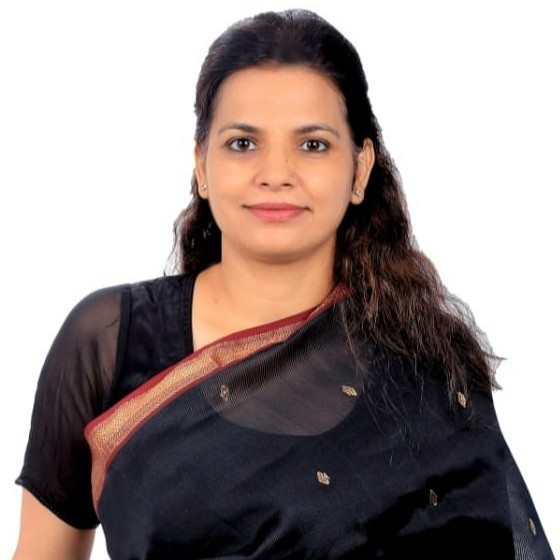

Meet Sarita Chand, a visionary entrepreneur whose journey over the past 17+ years spans investment banking, ed-tech, and social impact. As the Co-Founder of EduPristine, she helped build the business from the ground up — raising funding from the likes of Accel Partners and Kaizen PE — and ultimately guiding its acquisition by Adtalem Global Education (ATGE, NYSE). Before founding her own ventures, she sharpened her financial acumen working at top-tier firms including Goldman Sachs and the Aditya Birla Group, gaining deep exposure to capital markets, risk management, and global strategy.






Skillsoft is a global leader in corporate learning, providing digital training and education solutions to help businesses improve workforce productivity, reduce risk, and increase innovation.

FinShiksha provides a practical and industry-relevant approach to finance education, with courses designed by industry experts and delivered through interactive and engaging methods.

Wall Street Prep offers best-in-class financial training for aspiring finance professionals and corporate clients.

Udemy Business offers an unparalleled learning experience for organizations looking to upskill their workforce with over 155,000 courses taught by expert instructors.


